
As Charles Duhigg puts it very eloquently in his book The Power of Habit
A habit is a choice that we deliberately make at some point, and then stop thinking about, but continue doing, often every day.
At some point in time, you would have made a choice to do something, be it smoking or drinking or even chewing gum. You would have developed a routine out of it and before you know it, it would have become a habit. A habit is an automatic behaviour that is recorded somewhere in the basal ganglia of your brain. Scientists have found out that there are very specific neural patterns in your brain that correspond to each and every habit that you develop. Research in this area tells us that habits can’t be eliminated but can only be replaced.
Charles Duhigg’s book deals with habits and how to break our habitual behaviours effectively. It deals with personal, organisational and societal habits. The basic is simple. Every habit has a cue that triggers a routine and there is a subsequent reward that you get as a result of executing the routine.
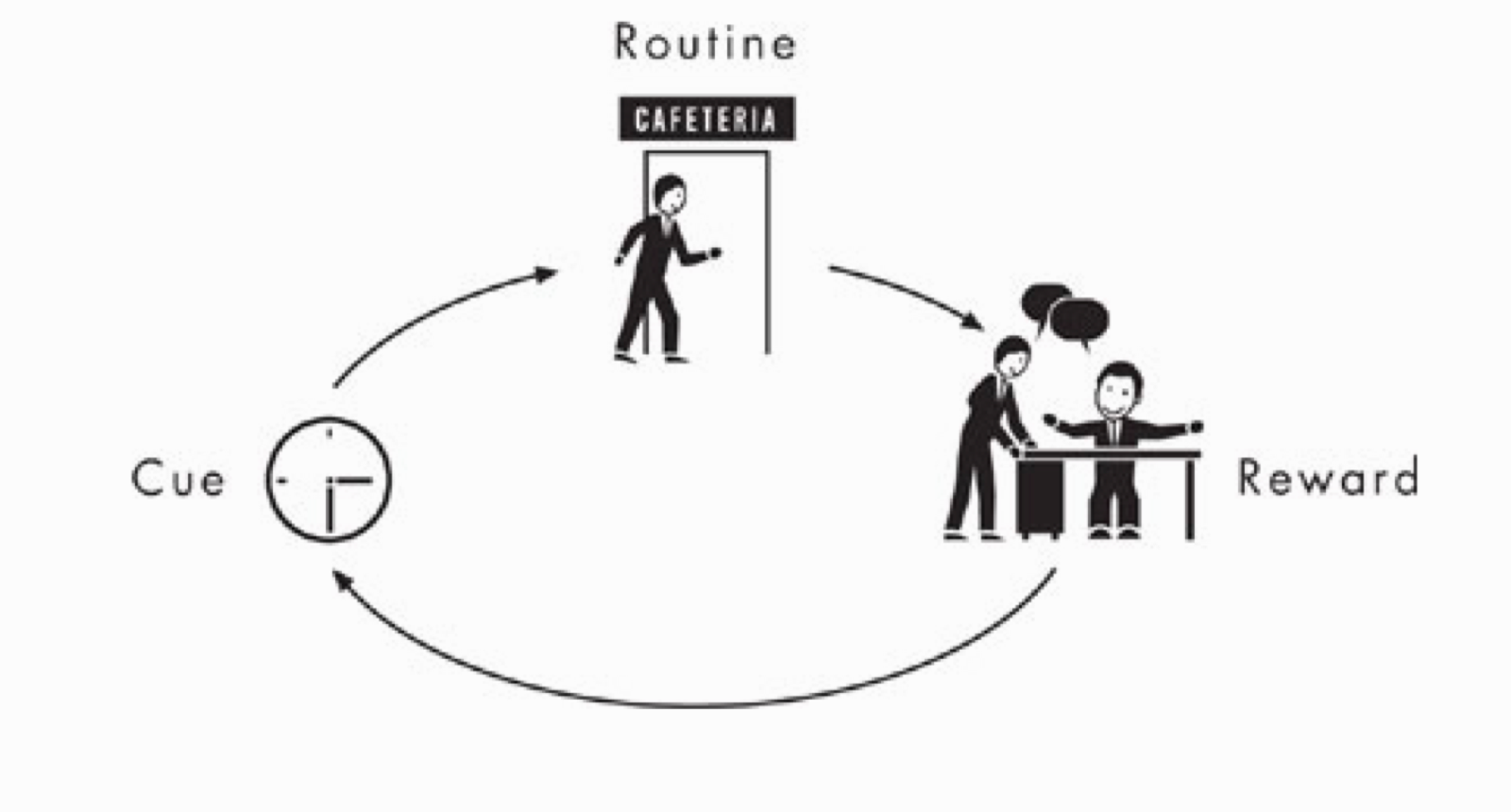
For example, consider a very simple habit like eating breakfast. Each of us will have a different cue that triggers us to have breakfast. It could be the clock showing the time as Eight o’ clock for some, feeling hunger for some others while for still others it might be the aroma that comes out of the kitchen. Whatever it is, it triggers a routine that has been recorded in our brain. That routine would also be different for each of us. Some of us would wash our hands first, others might go fetch the plate first, still others might directly go to the refrigerator and start with a glass of fresh juice.
The execution of the routine provides a reward. It might be curbing the hunger, or feeling satisfied or something else. For every single habit that we have, there is such Cue -> Routine - > Reward neural pattern in our brain.
It is not possible to completely erase this pattern once it forms. Our brain will always remember this particular pattern. To successfully get off a bad habit, you need to keep the cue and the reward constant and replace the routine.
For example, consider that you have a smoking habit. The first step in stopping is to identify the cue that makes you smoke. For some people it might be hunger, still others would want to smoke when they feel full after a meal. Once the cue is identified, you need understand the reward that you get out of executing your routine (That is smoking). Is it the high? Or is it the time you spend outside while smoking and thinking about some random things?
Once you identify that, you need to replace that routine with something that gives you the same reward. If socialising is why you smoke, you should have a chai while socialising. If it is the high, you may try meditating. Or something else. Once this habit replaces the old habit, you would have come out of the bad habit successfully.
The book by Charles Duhigg is one of the best books I have read on this subject. It has a lot of examples that will teach you about the different ways in which habits develop. The book also has a very exhaustive notes section, which has some very interesting resources. If you are troubled by some bad habit, I recommend that you try this book.